Revolutionary Breathing Emergency Detection Feature for Pixel Watch
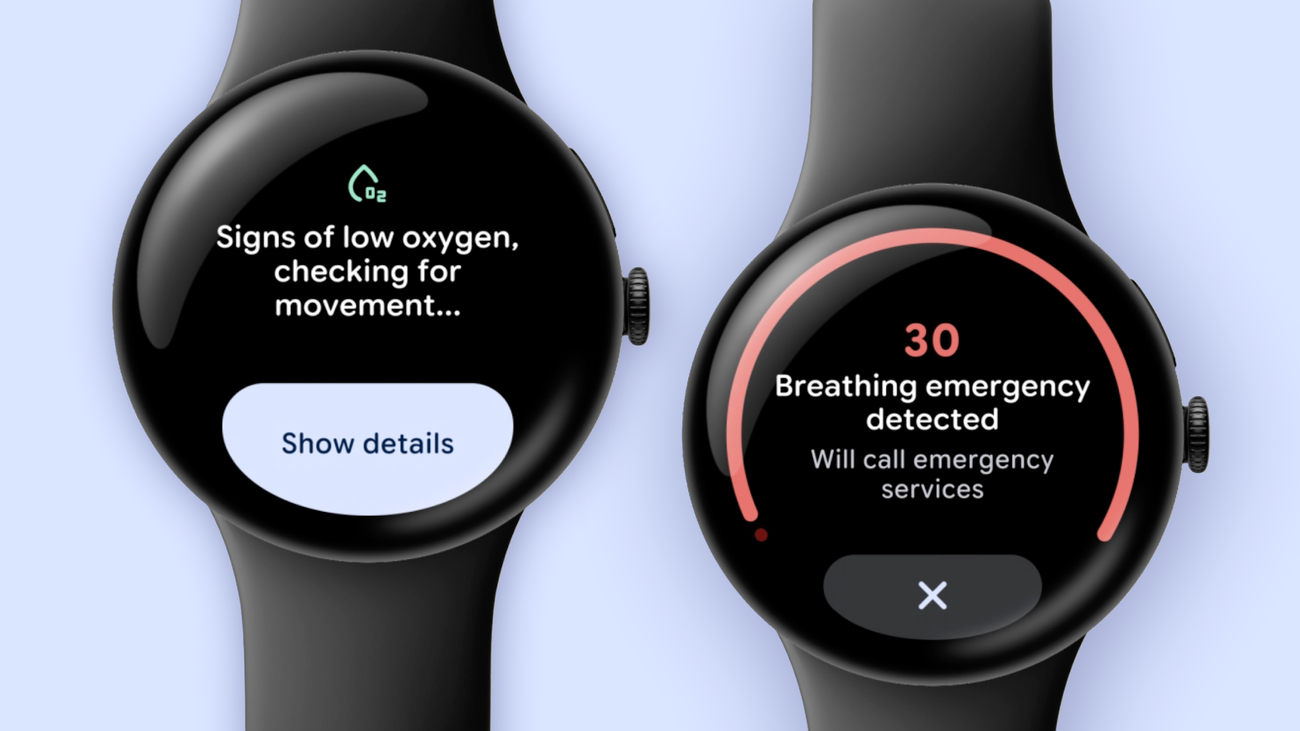
The Pixel Watch is stepping up to the plate with its innovative Breathing Emergency Detection feature, designed to assist users in critical breathing-related emergencies. This groundbreaking technology can automatically alert emergency services and notify designated contacts if it detects a significant drop in blood oxygen levels, potentially saving lives.
Understanding Breathing Emergencies
Breathing emergencies can arise unexpectedly from various causes such as severe pneumonia, accidental drug overdoses, or choking incidents. These situations can quickly render an individual unresponsive, making it impossible for them to seek help. The Pixel Watch’s Breathing Emergency Detection aims to change that by providing a safety net during these critical moments.
How the Detection Works
The Breathing Emergency Detection feature employs an advanced AI-based algorithm that analyzes data from the watch’s heart rate, motion, and altitude sensors. This sophisticated system is designed to minimize false alerts by ensuring that the user is in a low-motion state without significant altitude changes. Additionally, it checks that the user has not been asleep for over 30 minutes to avoid confusion with sleep apnea conditions.
Phased Emergency Response
In the event that the algorithm determines a user may have stopped breathing, it initiates a carefully structured response protocol:
- Initial Alert: The watch will first vibrate strongly and display a full-screen notification.
- Audible Warning: If there is no response to the visual alert, an audible sound will follow, accompanied by a 30-second countdown.
- Emergency Call: If the countdown concludes without user interaction, the watch will automatically prompt the connected smartphone or LTE-enabled watch to dial emergency services.
Upon connecting, an automated message will inform the emergency operator of the detected breathing emergency, indicating that the user is unresponsive and providing their exact location. Furthermore, if emergency contacts have been pre-set, they will receive a notification indicating that assistance may be needed.
Collaborative Development for Safety
The development of this feature was undertaken with great care, involving collaboration with medical professionals including internal medicine doctors, cardiologists, and emergency medical experts. Understanding the physiological signs of oxygen loss was crucial in shaping the technology effectively. Rigorous testing was conducted in clinical settings where volunteers simulated emergency scenarios under medical supervision, ensuring the system’s reliability.
Real-World Testing and Feedback
The algorithm was also validated against extensive real-world data to minimize false alarms. This meticulous testing phase involved hundreds of thousands of hours of data analysis, ensuring that the feature is both accurate and reliable. Collaboration with emergency medical services and public health leaders was essential to ensure that the alerts are compatible with current emergency response frameworks.
Availability and Future Prospects
The Breathing Emergency Detection feature is currently available on the Pixel Watch 4 and 5 in several European countries, including Austria, Denmark, France, Germany, Ireland, the Netherlands, Norway, Sweden, Switzerland, and the U.K. Google has plans to expand this feature to more regions in the near future.
With its launch, the Pixel Watch continues to demonstrate a commitment to integrating advanced safety features into wearable technology. Alongside Loss of Pulse Detection, Breathing Emergency Detection represents a significant advancement in proactive personal safety technology.
The Pixel Watch 5 is available for preorder and is expected to hit shelves soon, priced starting at $399 for the 41mm model and $429 for the 45mm variant. As technology continues to evolve, features like Breathing Emergency Detection will play a crucial role in enhancing personal safety and health monitoring.
Source for the original facts: Original source.