Google Expands TPU Portfolio with 8tx and 8i Max for Enhanced AI Workloads
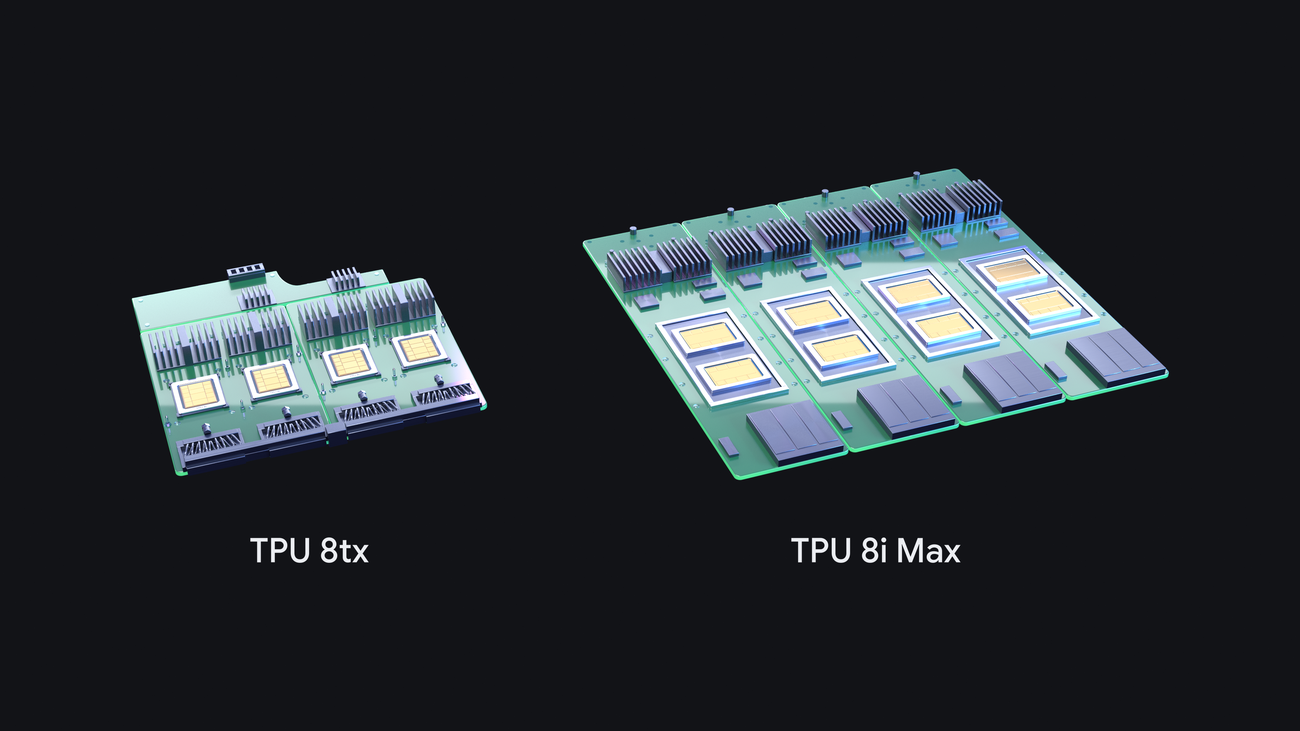
Google has recently unveiled two new additions to its eighth-generation Tensor Processing Unit (TPU) lineup: the TPU 8tx and TPU 8i Max. This expansion marks a significant milestone, as it represents the introduction of four TPU systems within a single year. These new systems are designed to address the evolving demands of AI workloads, particularly in the realms of secure inference and large context processing.
Understanding the New TPU Systems
The TPU 8tx is specifically engineered for secure and confidential inference, making it ideal for organizations that require stringent data security measures. Meanwhile, the TPU 8i Max focuses on delivering massive context windows, which are crucial for handling complex agentic workloads. Both systems are built to enhance the performance and efficiency of AI applications, from training models to serving them in production environments.
Key Features and Performance Enhancements
Google’s eighth-generation TPUs have evolved significantly since their inception over a decade ago, originally developed to meet internal demands such as voice recognition and language translation. The current TPU lineup includes:
- TPU 8t: Designed for large-scale training.
- TPU 8i: Optimized for real-time reasoning.
- TPU 8tx: Focused on secure inference.
- TPU 8i Max: Built for handling extensive context windows.
These systems are not just incremental upgrades; they offer substantial improvements in performance metrics. For instance, TPU 8t and TPU 8i have been reported to deliver up to 2.7 times better training performance and 80% improved inference price performance compared to their predecessors.
Addressing Modern AI Challenges
As the landscape of artificial intelligence continues to evolve, the need for specialized hardware has become increasingly apparent. Organizations are now seeking accelerators that can handle extensive context windows and ensure data security, particularly in regulated industries. The TPU 8tx addresses these needs by integrating hardware-level data security directly into its architecture.
Traditionally, data security measures involve encrypting information during storage or transmission, but this data must be decrypted for processing, potentially exposing it to risks. The TPU 8tx mitigates this issue by keeping sensitive data encrypted even during active processing, thus maintaining a high level of confidentiality.
Future Outlook for TPU Technology
Google’s commitment to advancing TPU technology is evident in its approach to system design. By focusing on modularity and system balance, Google aims to deliver specialized supercomputers that can be developed and deployed rapidly in response to market demands. This flexibility allows Google to respond swiftly to emerging customer needs and research applications.
The introduction of the TPU 8tx and TPU 8i Max not only enhances Google’s TPU portfolio but also reflects a broader trend in the industry towards creating hardware that is both powerful and secure. As more enterprises adopt AI technologies, the demand for such specialized systems is likely to grow, positioning Google as a leader in the field of AI infrastructure.
For developers and organizations looking to leverage these advancements, Google has made efforts to ensure that TPUs are accessible through an open software stack, enabling easier integration into existing workflows. This approach aims to democratize access to cutting-edge AI technology, empowering a wider range of users to harness the power of TPUs for their applications.
Source for the original facts: Original source.