Boosting User Engagement with Gratitude Widgets
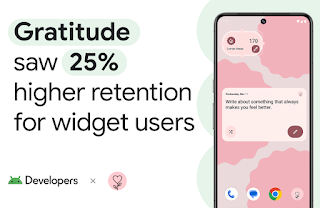
In the ever-evolving landscape of mobile applications, developers are always on the lookout for innovative ways to enhance user engagement and retention. A recent case study highlights how the introduction of widgets can significantly impact user interaction, particularly through the example of the Gratitude app.
Understanding Widget Integration
Developers Divij Gupta and Narendra Aanjna took a strategic approach by creating specific widgets tailored to the core user journeys within their app. The primary objective was to engage users during their daily routines without necessitating a full session in the app. This method not only simplifies user interaction but also ensures that the app remains relevant in users’ daily lives.
Optimizing User Interface Across Devices
To enhance the user experience, the team focused on simplifying the user interface (UI) while also ensuring consistency across various OEM launchers. Testing was a crucial step in this process; it allowed the developers to verify that the widget layouts appeared correctly on different devices. This attention to detail is vital in providing a seamless experience for all users.
Personalized Widget Previews
One of the standout features of the Gratitude widgets is the implementation of Generated Widget Previews. This functionality allows users to see personalized previews of the widgets before installation, making the experience more engaging. However, the developers noted that testing these previews could be slow due to rate limiting, which is designed to preserve battery life. To streamline testing, they recommend utilizing the adb command to bypass these limitations.
Enhancing Discoverability with In-App Promotion
To further boost the use of widgets, Gupta and Aanjna employed in-app widget pinning. This strategy increases widget visibility and encourages installations by prompting users to add widgets at contextually relevant moments within the app. This approach eliminates the need for users to navigate through the system widget picker, thus simplifying the process and increasing the likelihood of widget adoption.
As part of their strategy, the developers shared a GIF illustrating how users can easily access the widget addition feature through a bottom sheet in the app. This visual aid enhances understanding and encourages users to explore the widget functionality.
Embracing Modern Development Practices
Gupta expressed satisfaction with their experience using Jetpack Glance, noting that the Compose-based framework offers a modern and flexible approach to widget development. This technology allows developers to create layouts that align closely with the overall app design, ensuring consistency and a better user experience. The flexibility provided by Jetpack Glance enables quicker iterations on UI changes, overcoming many constraints previously faced with RemoteViews.
In conclusion, the Gratitude app’s innovative use of widgets has resulted in a remarkable increase in user retention, showcasing the potential of well-designed mobile features. By meeting users where they are and integrating engaging, personalized experiences, developers can significantly enhance app engagement.
Getting Started with Jetpack Glance
For developers interested in exploring Jetpack Glance and the technologies discussed, several guides are available to help get started. These resources can provide insights into the best practices for implementing widgets and optimizing user engagement.
Source for the original facts: Original source.