Unleashing Creativity with Gemini Omni: A New Era in Video Creation
In the rapidly evolving landscape of video production, Google’s latest AI model, Gemini Omni, is setting a new standard for creativity and ease of use. This innovative tool transforms the way we think about video editing and creation, allowing users to generate and manipulate videos as effortlessly as having a conversation.
What is Gemini Omni?
Gemini Omni is designed to simplify the video creation process. It empowers users to generate high-quality videos from a variety of inputs, including text, images, audio, and existing video footage. By leveraging an intuitive understanding of physics and real-world knowledge, Omni ensures that the outputs are not only visually compelling but also realistic and coherent.
Exciting Projects by Builders Using Gemini Omni
Since its introduction, developers have eagerly embraced Gemini Omni, showcasing its capabilities through various innovative projects. Here are some standout examples:
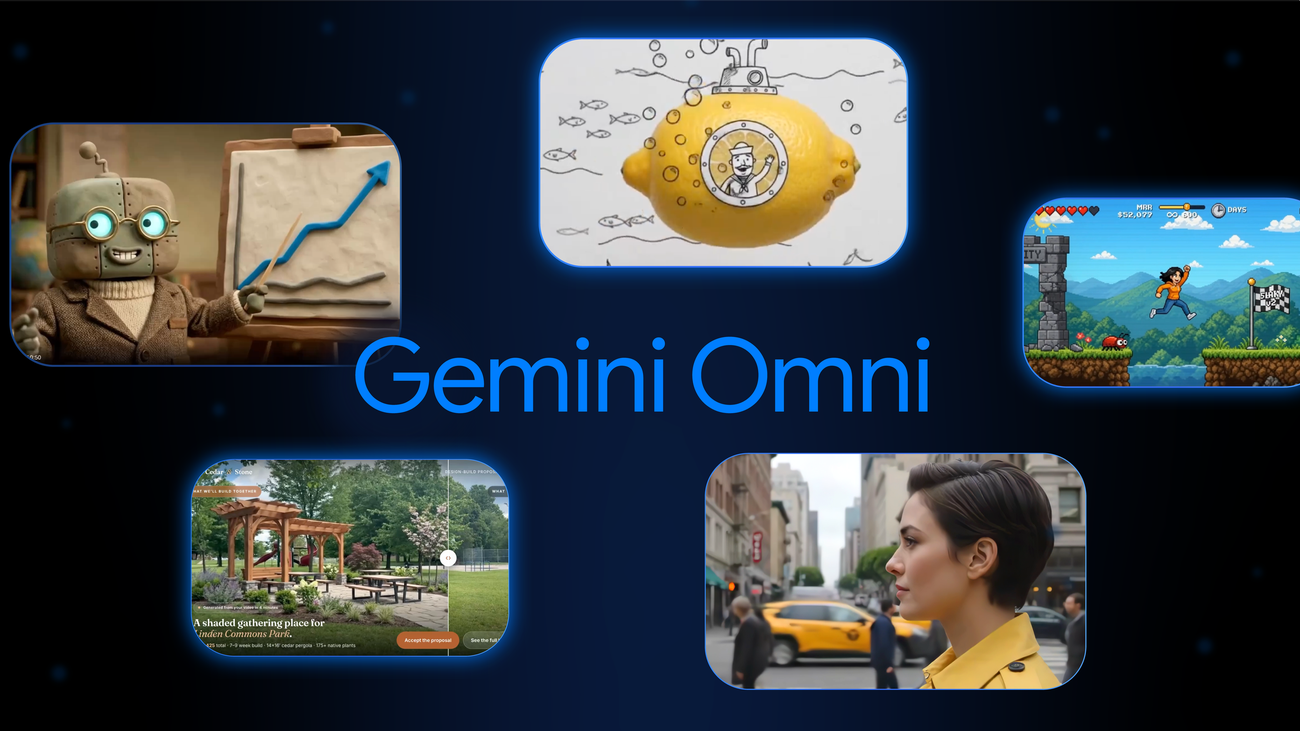
- Leon Lin (@LexnLin on X) utilized Omni’s features to create a dynamic video capturing a woman in a bustling city. By switching perspectives and backgrounds, he offers viewers a comprehensive view from multiple angles, enhancing the storytelling aspect of the video.
- Carlos Santana (@DotCSV on X) demonstrated the voice-controlled editing capabilities of Omni. In his project, he transformed a sunny outdoor scene into a winter wonderland with just a few spoken commands, showcasing the model’s ability to change environmental conditions seamlessly.
- Pan (@sebatheepan on X) took a playful approach by turning simple doodles into animated elements. His creative vision turned everyday objects into whimsical animations, such as a lemon becoming a submarine and scissors morphing into a shark.
- Jerrod Lew (@jerrod_lew on X) explored the stylistic versatility of Omni by rendering a single video in multiple animation styles. His project fluidly transitioned between live-action, anime, and claymation, demonstrating Omni’s capability to maintain narrative continuity across diverse aesthetics.
- Hyperagent (@hyperagentapp on X) showcased the practical applications of Omni in a professional setting. They visualized design proposals by layering landscaping into videos, animated data presentations, and even gamified to-do lists, illustrating the model’s potential for business and creative projects alike.
The Power of Natural Language Processing
One of the standout features of Gemini Omni is its ability to understand and process natural language inputs. Users can describe their vision or provide references, and Omni will blend these elements to produce cohesive video clips. This functionality makes it accessible for creators of all skill levels, from novices to seasoned professionals.
Where to Access Gemini Omni
Users interested in exploring the capabilities of Gemini Omni can find it integrated into various platforms, including the Gemini app, Google Flow, Google AI Studio, and the Gemini API. Whether you are looking to create content for personal enjoyment or professional use, Omni provides the tools necessary to bring your ideas to life.
As video content continues to dominate digital media, tools like Gemini Omni are revolutionizing the creative process. By making video editing intuitive and accessible, Google is empowering creators to push the boundaries of their imagination.
Source for the original facts: Original source.