Revolutionizing Disease Management: Google’s AMIE AI System
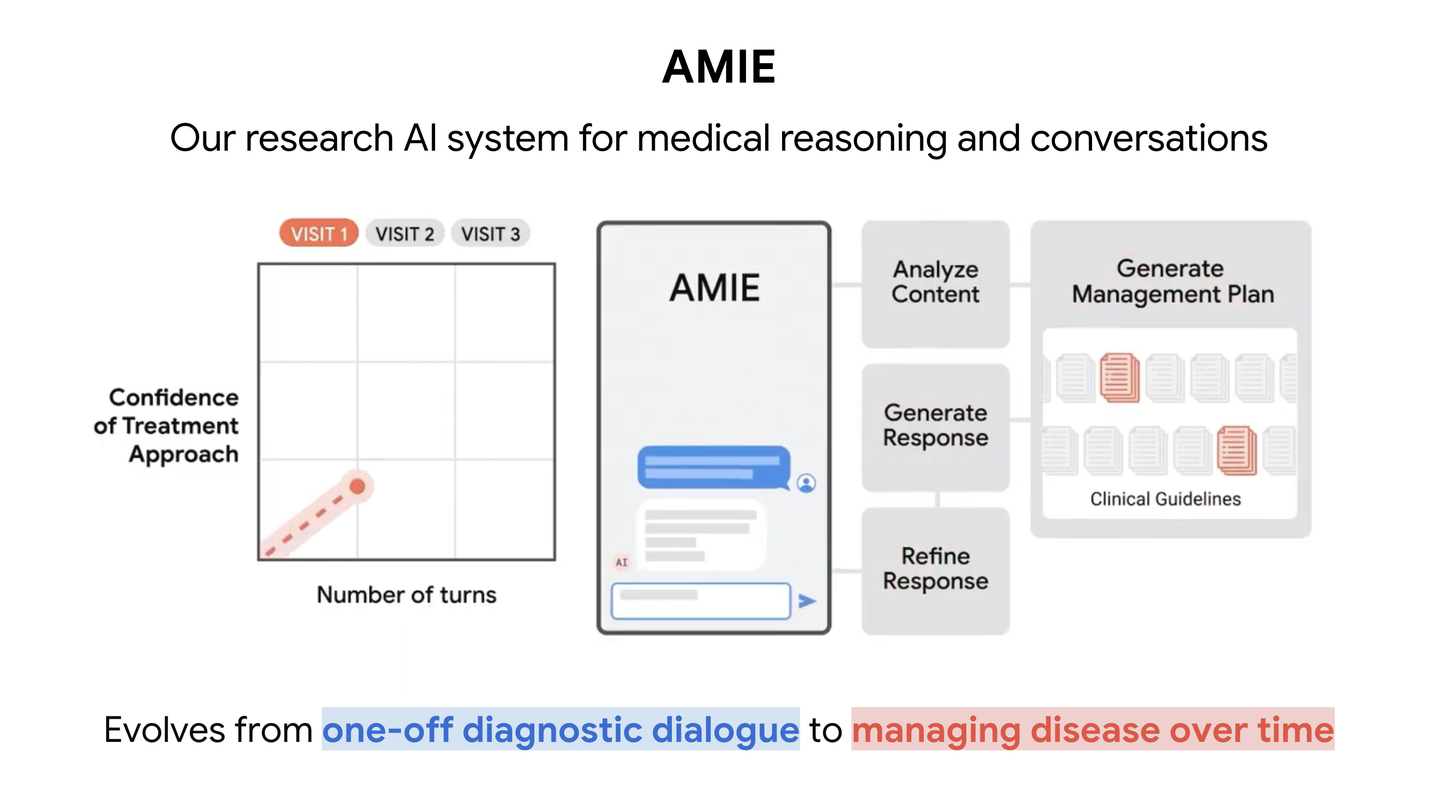
In the ever-evolving landscape of healthcare, accurate diagnosis is just the beginning of patient treatment. Once a diagnosis is made, the real challenge lies in the ongoing management of health conditions. This involves tracking symptoms over multiple visits, interpreting updated guidelines, and adjusting medications accordingly. Recent research published in the journal Nature highlights the potential of Google’s Articulate Medical Intelligence Explorer (AMIE), an advanced AI system designed to enhance medical reasoning and support long-term disease management.
AMIE: From Diagnosis to Long-Term Management
AMIE represents a significant leap from traditional diagnostic tools, evolving into a comprehensive solution for managing health conditions over time. By utilizing the long-context capabilities of Gemini models, AMIE is able to facilitate empathetic dialogues with patients while simultaneously employing a sophisticated management reasoning agent. This agent is capable of cross-referencing extensive clinical knowledge, ensuring that the care provided is both precise and aligned with established guidelines.
Empathetic Dialogue and Reasoning Capabilities
The dual functionality of AMIE—acting as both a conversational agent and a management reasoning tool—sets it apart from existing medical AI systems. The empathetic dialogue agent engages patients in real-time conversations, providing a supportive environment for discussing symptoms and concerns. Meanwhile, the deep-thinking reasoning agent utilizes hundreds of pages of authoritative clinical data to inform its recommendations and decisions.
Comparative Study Outcomes
A blinded study involving patient actors was conducted to assess AMIE’s effectiveness compared to 21 primary care physicians. The results were promising: AMIE not only matched the clinicians in overall management reasoning but also outperformed them in two critical areas: plan preciseness and adherence to clinical guidelines. These findings suggest that AI technology like AMIE could play a transformative role in the healthcare sector, potentially allowing physicians to focus more on direct patient care.
Future Directions for AMIE in Clinical Settings
Following the encouraging results from the initial study, Google is now exploring the application of AMIE in real-world clinical environments. A nationwide study has been launched to further assess the role of AI in virtual care, paving the way for a future where AI can seamlessly integrate into healthcare practices.
Conclusion: The Future of AI in Healthcare
The ongoing research and development of AMIE signal a promising future for AI in healthcare. As the technology advances, it holds the potential to not only enhance the efficiency of healthcare delivery but also improve patient outcomes through more personalized and precise care. The implications of this research are significant, suggesting that AI could become an invaluable partner for healthcare professionals in managing complex health conditions.
Source for the original facts: Original source.