Understanding Full-Stack AI: A Comprehensive Overview

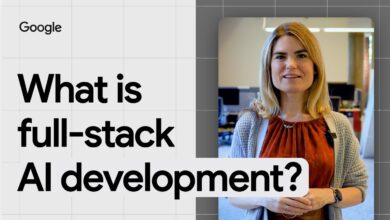
In the rapidly evolving landscape of artificial intelligence, the term “full-stack AI” has emerged as a crucial concept. This approach integrates all layers of technology—from hardware to user interfaces—into a single cohesive system. Google expert Richard Seroter, who leads developer experience at Google Cloud, sheds light on the significance of this methodology and how it shapes the future of AI development.
What is Full-Stack AI?
The full-stack approach to AI combines various components necessary for effective AI deployment. Traditionally, software development required multiple specialized teams, including front-end developers for user interfaces and back-end developers for server-side logic. The introduction of the “full-stack engineer” concept allowed for a more streamlined process, where a single developer could handle all aspects of app development.
Google has taken this idea further by applying the full-stack principle to AI. Rather than assembling disparate parts from multiple vendors, developers can use an integrated system where all necessary components are already connected and optimized for performance.
The Components of a Full-Stack AI
A well-structured AI stack consists of several essential layers:
- Compute Infrastructure: This includes hardware like Tensor Processing Units (TPUs) that provide the necessary power for AI computations.
- AI Models: Advanced models such as the Gemini family developed by Google DeepMind form the core of AI functionality.
- Orchestration Platform: This layer manages the workflow and execution of AI tasks, ensuring smooth operation.
- User Interfaces: Intuitive interfaces allow users to interact with AI applications, making technology accessible to everyone.
Google’s investment in these layers allows developers to focus on building innovative solutions without the hassle of integrating various components from different sources.
Advantages of a Full-Stack Approach
The full-stack AI strategy offers numerous benefits, including:
- Improved Reliability: By using an integrated system, developers can ensure that all components work seamlessly together, reducing the likelihood of failures.
- Cost Efficiency: A cohesive system minimizes the need for multiple vendor contracts and simplifies the procurement process.
- Simplified Development: Developers can concentrate on creating applications instead of managing different technologies, which accelerates the development cycle.
Google’s Commitment to Full-Stack AI
Google’s commitment to a full-stack approach is not a recent development but rather part of a long-term strategy. For over a decade, the company has focused on building a robust infrastructure to support its AI initiatives. This includes the early adoption of custom TPUs and the development of foundational models that power many of its products.
Despite the advantages of a full-stack approach, some may worry about potential limitations. However, Google emphasizes its dedication to open-source principles, frequently sharing foundational technology and source code that benefits the broader community. This commitment ensures that while Google provides a full-stack solution, it does not restrict developers’ creativity and innovation.
Getting Started with Full-Stack AI
For developers looking to dive into full-stack AI, Google offers several platforms to facilitate this journey:
- Google AI Studio: A platform for prototyping AI applications, enabling developers to experiment and iterate quickly.
- Gemini Enterprise Platform: Designed for automation, this platform streamlines the deployment of AI solutions.
- Antigravity Platform: A tool for building complex AI agents, providing advanced capabilities for sophisticated projects.
In conclusion, the full-stack AI approach represents a significant evolution in how artificial intelligence is developed and deployed. By integrating all layers of technology into a unified system, Google not only enhances reliability and efficiency but also empowers developers to unlock the full potential of AI.
Source for the original facts: Original source.