Unlocking the Potential of Pixel Devices: A Developer’s Guide

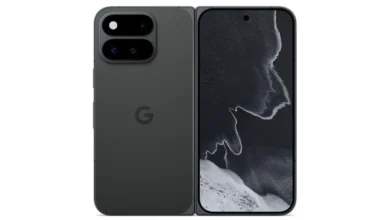
The recent unveiling of the Pixel 11 Pro Fold, Pixel Watch 5, and the entire Pixel family at Made by Google marks a significant advancement in the Android ecosystem. This evolution presents developers with a unique opportunity to enhance app experiences across a variety of screen sizes and user interactions.
Adapting to Foldable Devices
With foldable devices becoming increasingly popular, it’s essential for developers to understand how to design apps that leverage their unique capabilities. Users of foldable phones tend to engage with apps more frequently, spending approximately 14 times more than standard phone users. To capitalize on this trend, developers are encouraged to utilize resources like Window Size Classes from the WindowManager library. This tool helps ensure that app layouts respect the physical folds and hinges of devices, allowing for a more intuitive user experience.
State Preservation Across Configurations
Maintaining a seamless user experience during transitions is crucial. Implementing state preservation techniques, such as using ViewModel, allows developers to retain UI states, like scroll positions and form inputs, even when switching between different screen configurations. For instance, Flo Health successfully implemented Jetpack Compose state primitives and ViewModel to enhance their app’s resilience against layout changes, ultimately reducing their state-preservation code by about 30% while improving overall performance.
Enhancing User Interaction with Wear OS
The introduction of the one-handed gestures framework in Wear OS 7 allows users to interact with their devices more conveniently. This feature enables simple physical inputs, like double-pinching or wrist turns, to control apps without needing to use both hands. Spotify is already taking advantage of this framework to simplify media playback controls, making it easier for users to manage their music even when their hands are occupied.
Real-Time Updates and Widgets
Wear OS 7 also introduces Live Updates, providing users with real-time information such as live sports scores and delivery statuses directly on their wrists. This feature can be utilized by developers to keep users informed about important updates without needing to check their phones. Additionally, the new Wear Widgets, built on Jetpack Glance and RemoteCompose, offer a more expressive and consistent design compared to the previous Tiles framework.
On-Device Intelligence with Gemini Nano 4
The Pixel 11 devices are equipped with Gemini Nano 4, which facilitates fast, on-device AI processing. By running AI workflows directly on the device, developers can create applications that deliver low-latency, real-time interactions. The ML Kit GenAI Prompt API allows developers to send natural language requests directly to the Gemini Nano, supporting over 140 languages and enabling advanced features like structured output and thinking mode.
To effectively implement these capabilities, developers are encouraged to explore the updated adaptive guidance and integrate AI features using the available self-service tools and Gemini models. This integration not only enhances user experience but also aligns with the evolving landscape of mobile technology.
Streamlining Development with Android Skills
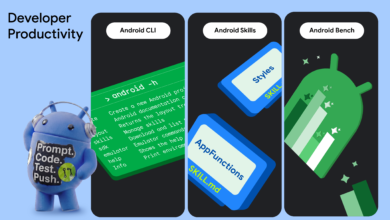
To facilitate faster implementation of these updates, Android skills can be leveraged to provide AI-optimized instructions for various tools and agents. Whether using Gemini in Android Studio or the Android CLI, these skills offer the context needed for executing complex tasks automatically. For example, developers can use the CameraX skill to manage camera display scaling or the Adaptive skill to create dynamic layouts in Compose without extensive manual adjustments.
In conclusion, the advancements showcased at Made by Google highlight the importance of adapting applications for new device capabilities and user behaviors. By embracing these developments, developers can significantly enhance their app experiences, paving the way for a more engaging and efficient mobile ecosystem.
Source for the original facts: Original source.