Exploring Google’s Latest AI Innovations: October 2026 Updates

Introduction to Google’s AI Advancements
In October 2026, Google reaffirmed its commitment to artificial intelligence by unveiling a series of groundbreaking updates designed to enhance productivity, security, and creativity. Among the highlights were the rollout of Gemini 4 Argon and Carbon, along with the introduction of Genie 4, marking a significant leap forward in AI capabilities.
Gemini 4: A New Era in AI Models
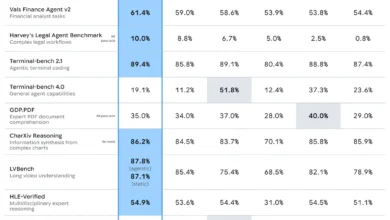
Google launched Gemini 4 Argon, a frontier reasoning model, which has been made available to developers, enterprises, and consumers. This model is particularly adept at handling complex tasks such as coding, financial analysis, and legal workflows. Following this, Gemini 4 Carbon was announced just two weeks later, boasting enhanced capabilities for long-horizon engineering and cybersecurity defense.
The rapid development of these models showcases Google’s dedication to pushing AI boundaries while ensuring robust safety measures. Carbon is currently in pre-release testing with select government and cybersecurity partners, highlighting the careful approach Google is taking in refining its features before a broader release.
Real-Time Interactive Simulations with Genie 4
Another significant announcement was the introduction of Genie 4, which enables users to create real-time interactive simulations. This tool offers unprecedented realism, advanced physics, and lifelike human movements, allowing users to steer scenes using natural language. Genie 4 represents a crucial step towards developing safer training environments for robots and AI agents, inching closer to the goal of Artificial General Intelligence (AGI).
Enhancing Security and Verification Tools
In an age where digital safety is paramount, Google has made strides in protecting users from scams. The new AI-powered Scam Detection feature in Android devices is capable of flagging millions of suspected scam calls and texts monthly. An opt-in Enhanced Protection mode in Google Messages utilizes advanced AI models to identify sophisticated conversational scams, ensuring users can communicate safely.
Furthermore, Google expanded its SynthID Detector, which allows users to verify if content is AI-generated. This tool is now available globally for English-speaking users, enhancing transparency in digital media consumption. With over 180 billion images and videos already watermarked, SynthID aims to provide users with a reliable means of discerning AI-generated content.
Innovations in Health and Fitness Tracking
Google also unveiled the Fitbit Edge, its most advanced fitness tracker to date. With a sleek design and a battery life extending up to seven days, the Fitbit Edge integrates precision GPS and automatic workout recognition across more than 50 activities. Powered by the Gemini AI, it offers personalized guidance through the Google Health Coach, making it a valuable tool for fitness enthusiasts.
In health research, Google’s AMIE conversational AI system was evaluated in real-world primary care settings, demonstrating its effectiveness in preparing clinicians for patient visits. This AI tool has shown promising results in gathering patient histories and generating clinical summaries, significantly enhancing the efficiency of healthcare delivery.
Empowering Creativity and Learning
Google’s Playground is an innovative gaming platform that allows users to create and share custom games without any coding knowledge. This feature encourages creativity and engagement, providing a simple way for users to develop single- and multiplayer experiences.
Moreover, Google’s Gemini Notebook is designed to enhance learning experiences. It offers interactive learning overviews and custom quizzes, enabling students to study more effectively. The introduction of co-creation controls for Slide Decks and Video Overviews further empowers users to personalize their educational content.
Privacy-First Multimodal Search with EmbeddingGemma 2
Finally, Google introduced EmbeddingGemma 2, a new open embedding model engineered on the Gemma 4 architecture. This model enhances privacy by mapping code, images, video, and audio into a unified space, allowing for efficient offline app development. Its modular design significantly reduces local vector storage, making it easier for developers to create applications that can search and retrieve specific content seamlessly.
Conclusion
October 2026 marked a pivotal month for Google as it rolled out a series of innovative AI tools aimed at improving everyday life. From advanced models like Gemini 4 Argon and Carbon to enhanced security measures and creative platforms, Google continues to lead the way in AI technology, making strides that promise to benefit users across various sectors.
Source for the original facts: Original source.