Transforming Instagram Direct with AI-Native UI and Jetpack Compose
Introduction to Instagram Direct’s Evolution
Instagram Direct, a crucial feature of the Instagram app, manages billions of messages daily. Over the years, the engineering team has meticulously optimized the legacy Android View system, but this approach has led to significant technical debt and challenges in maintaining and expanding the platform. Recognizing the need for modernization, the team embarked on a transformative journey by adopting Jetpack Compose, leading to an AI-native UI architecture.
Key Benefits of Jetpack Compose
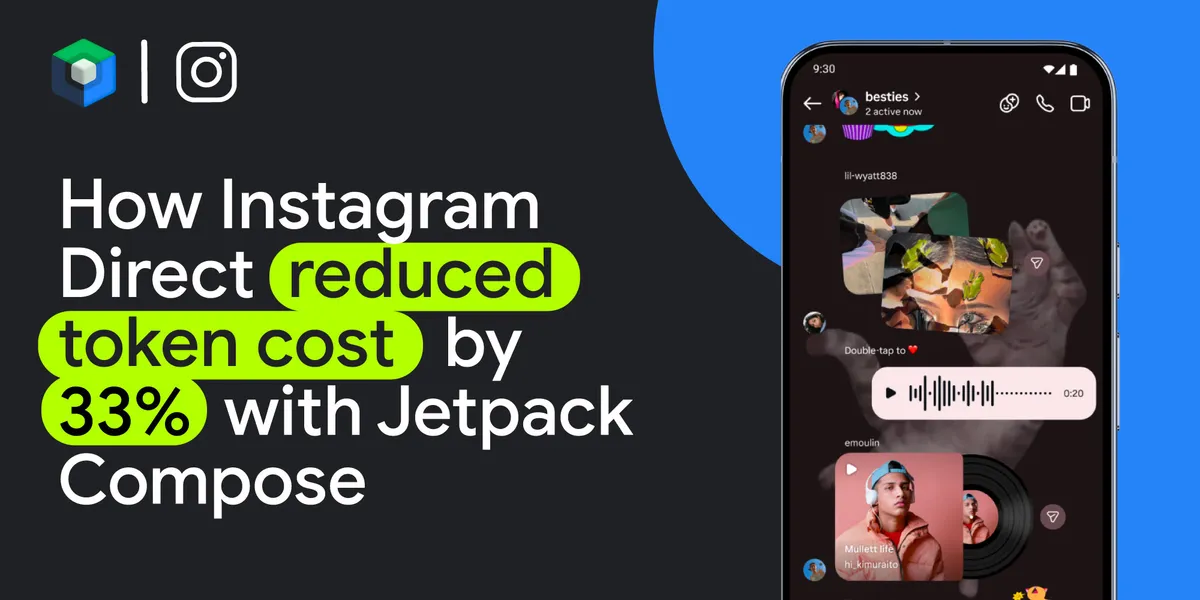
Transitioning to Jetpack Compose has proven to be more than a simple UI update; it has resulted in substantial enhancements and efficiency gains. The new architecture boasts a codebase that is 50% smaller than its predecessor, while also achieving a 35% reduction in AI agent execution time. Additionally, the team successfully reduced engineer-agent exchanges by 32% and lowered token costs by 33%, showcasing the effectiveness of this migration.
AI-Native Design Philosophy
The Instagram Direct engineering team aimed for an ambitious goal: to create an AI-native codebase from the ground up rather than retrofitting existing structures. This strategic approach multiplies the benefits of AI, making it a core component of the development process. Jetpack Compose’s declarative nature simplifies the code structure, making it easier for AI models to interpret and interact with, resulting in fewer side effects and clearer component boundaries.
Challenges of Migration
The migration process was not without its challenges. With hundreds of millions of users sending messages daily, the transition had to be seamless, avoiding any disruption to the user experience. Each UI component could have over 160 distinct state permutations, and a single conversation screen could manage more than 200 message types. To address this, the team carefully planned a gradual migration strategy, ensuring that both legacy and new components could coexist during the transition.
Architectural Considerations
Integrating Jetpack Compose into an existing View-based architecture posed unique challenges. The team recognized that mixing declarative and imperative code could lead to complications, including subtle bugs and performance regressions. To maintain a clean separation of concerns, they established a set of architectural guidelines. For example, every list item would be represented by its own abstraction, ensuring that all Compose code resided in the constructor, limiting access to class members and promoting cleaner, more maintainable code.
AI Workflows and Collaboration
To facilitate the migration, the team leveraged AI workflows that allowed multiple engineers to utilize shared knowledge and best practices. This collaborative approach ensured consistency across the project while speeding up the coding process. By dividing the migration into manageable stages, one engineer could establish the architecture and resolve complex edge cases, enabling others to focus on refining the UI without getting bogged down in technical decisions.
Results and Future Implications
The results of the migration have been overwhelmingly positive. The Instagram Direct surfaces that transitioned to Jetpack Compose not only reduced the total amount of UI code by 50%, but they also demonstrated improved output quality from AI agents due to the streamlined codebase. An internal analysis comparing AI agent sessions working with Compose against those using the legacy Android Views revealed significant efficiency gains.
This successful migration not only enhances the Instagram Direct experience for users but also sets a precedent for future developments within the Android ecosystem. The collaboration between Meta and Google has led to optimizations that benefit not just Instagram but also other developers utilizing Jetpack Compose.
As AI continues to evolve, the Instagram Direct team’s innovative approach serves as a blueprint for integrating AI-native design principles into large-scale applications, ultimately driving productivity and enhancing user experiences across platforms.
Source for the original facts: Original source.