Enhancing Android Apps with Intelligent Agentic Workflows
In the ever-evolving landscape of mobile applications, creating a seamless and intelligent user experience is paramount. The latest installment in the “Build Intelligent Android Apps” series delves into the fascinating world of in-app agentic workflows, which can significantly enhance the functionality of Android applications.
Understanding Agentic Workflows
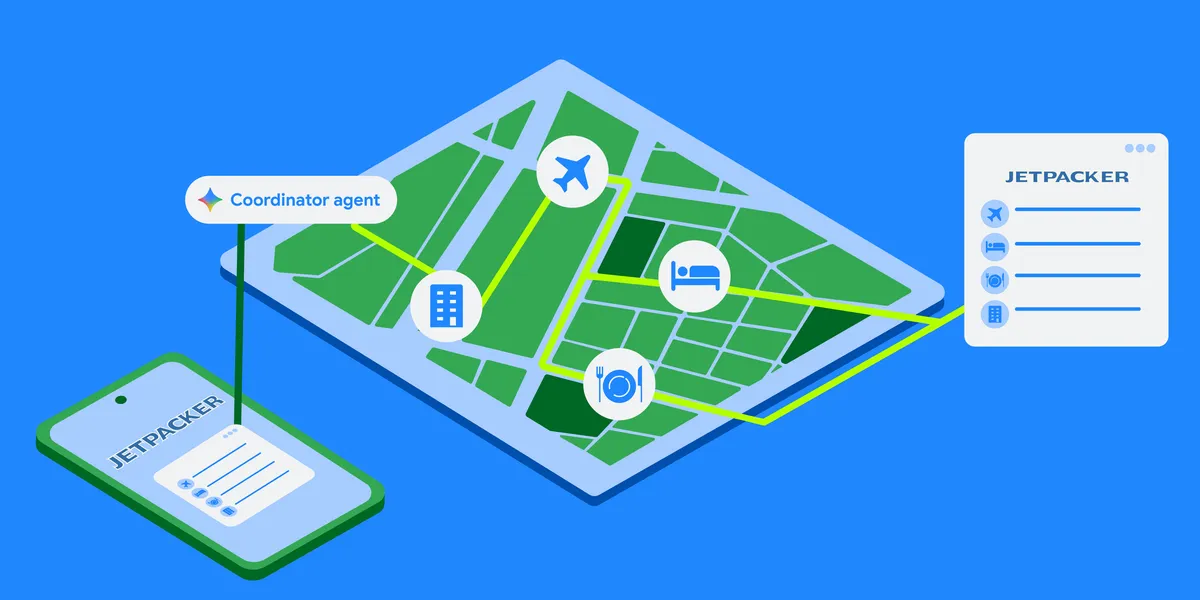
Agentic workflows are essential for tasks that require multiple steps and coordination between various services. Tasks like planning a holiday itinerary involve intricate processes such as booking flights, selecting hotels, and securing restaurant reservations. Managing these tasks within a single session on a mobile device can lead to complications, such as app closures that result in lost progress.
Leveraging Cloud-Hosted Backends
To address these challenges, developers can utilize a custom self-hosted backend that executes workflows in the cloud. This setup allows the Android app to connect to a persistent session, visualizing progress and only requesting user input when absolutely necessary. By doing so, the complexity of managing multiple API credentials and steps on the device is alleviated.
Introducing the Booking Assistant
Incorporating these workflows, the Jetpacker app has introduced a Booking Assistant that efficiently coordinates travel arrangements. This innovative feature utilizes the Agent Development Kit (ADK) to orchestrate a multi-agent system, employing both the Agent-User Interaction protocol (AG-UI) and the Agent-to-User Interface protocol (A2UI) for seamless interaction and display of information.
Simplifying Agent Development with ADK
The ADK simplifies the process of defining and executing agents. With its built-in tools, developers can create agents equipped with Python functions that handle database queries and execute bookings. This framework manages the execution flow, tracks conversation contexts, and routes messages, allowing developers to focus on crafting clear procedural logic.
Real-Time Communication with AG-UI
Establishing a reliable communication channel between the backend agent and the Android app is crucial. The AG-UI protocol serves as a bidirectional transport layer, standardizing message types between agents and UI clients. This enables the agent to communicate lifecycle events, text messages, and state updates to the client, while the client can send user messages and tool call results back to the agent.
Dynamic UI Updates with A2UI
To further enhance user experience, the A2UI protocol allows agents to dynamically describe and update UI components on the client side. This decoupling of the client’s visual implementation from the agent’s workflow state means that developers can introduce new features or modify layouts without requiring users to update the app. Instead, the server sends JSON payloads that specify which UI components to render and their properties.
Conclusion
By integrating intelligent agentic workflows into Android applications, developers can create more robust and user-friendly experiences. The combination of cloud-hosted backends, the ADK for agent management, and the AG-UI and A2UI protocols for communication and UI rendering paves the way for innovative app functionalities. As mobile applications continue to evolve, embracing these technologies will be key to staying ahead in the competitive landscape of app development.
Source for the original facts: Original source.