WhatsApp Enhances User Security with Innovative Passkey Sign-In
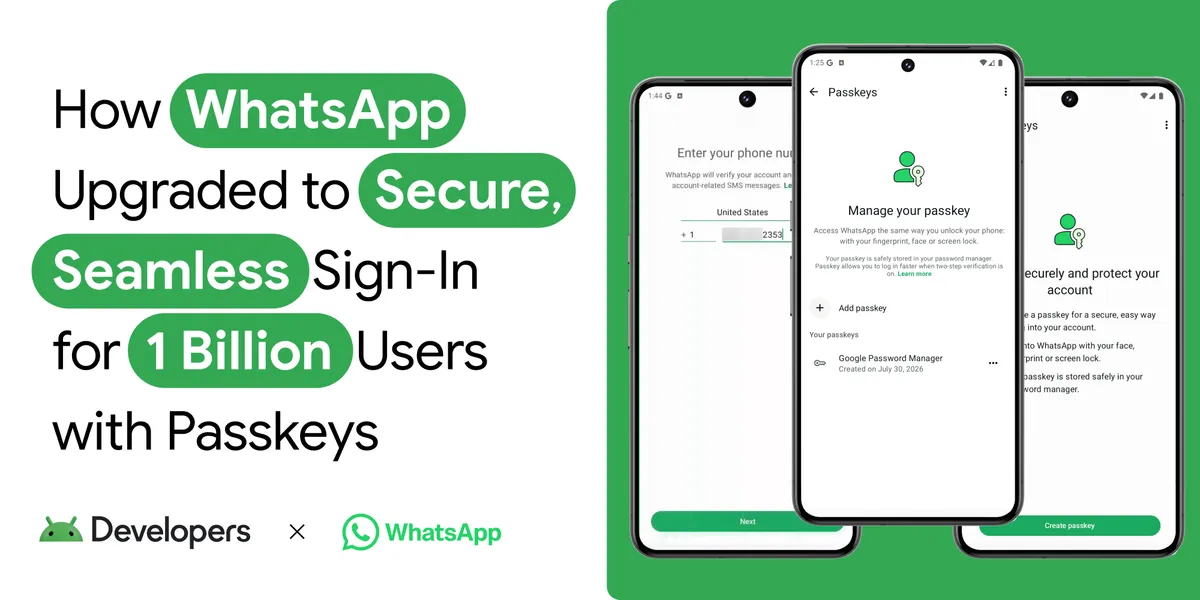
WhatsApp, recognized as the largest messaging platform globally, has announced a significant upgrade to its sign-in process, introducing passkey-based authentication. This innovative approach is set to enhance security and streamline the login experience for its billion-plus users.
The Impact of Passkeys on User Experience
WhatsApp’s implementation of passkeys is a game changer, particularly for a platform that serves a diverse audience across various regions. Mayank Manuja, an Android Engineer on the WhatsApp Registration and Access team, emphasizes the importance of even minor improvements in WhatsApp, given its extensive user base. The shift to passkeys aims to minimize user friction while maximizing security against threats like phishing and account takeovers.
Seamless and Secure Access
The primary advantage of passkeys lies in their ability to provide a fast and reliable login experience. Users can now enjoy a one-tap sign-in process that eliminates the risks associated with traditional password entry, including phishing attacks. This is particularly beneficial in regions where SMS delivery for one-time passwords (OTPs) may be unreliable.
Passkeys utilize public-private key cryptography, allowing users to authenticate via biometric data or screen locks instead of typing in passwords. This streamlined process not only enhances security but also keeps users engaged within the app’s interface, creating a more intuitive interaction.
Technical Implementation and Challenges
From a development standpoint, WhatsApp leveraged the Credential Manager API, which provided a simplified interface for integrating passkeys. This API allowed for the seamless creation and retrieval of credentials, making the implementation process more straightforward.
However, the integration journey was not without its challenges. WhatsApp faced a range of issues stemming from the diversity of its user base, which includes varying Android versions, device capabilities, and levels of digital literacy. For instance, users without a screen lock or those with outdated Play Services presented unique hurdles.
Collaborative Efforts for a Smooth Transition
To address these challenges, WhatsApp collaborated closely with Google. They conducted extensive A/B testing to develop a contextual framework for prompting passkey creation, ensuring that users received clear and concise instructions tailored to their specific needs. This iterative approach allowed WhatsApp to evolve its user interface, simplifying prompts to enhance clarity and reduce confusion.
On the backend, WhatsApp employs the WebAuthn/FIDO2 standards for authentication ceremonies, utilizing Erlang and the Rust webauthn-rs library for signature verification. This robust architecture ensures efficient credential management while maintaining stringent security protocols.
Cross-Platform Usability and Future Prospects
One of the most notable features of WhatsApp’s passkey implementation is its focus on cross-platform usability. Traditionally, the WebAuthn cross-device flow required users to scan QR codes and authenticate via Bluetooth, which proved to be unreliable. Instead, WhatsApp allows users to manage their passkeys across multiple ecosystems, such as Google Password Manager on Android and iCloud Keychain on iOS.
This user-friendly approach means that when users switch platforms, they can generate a new passkey during their next sign-in without any friction. This seamless transition underscores WhatsApp’s commitment to providing a secure and convenient messaging experience.
In conclusion, WhatsApp’s adoption of passkey technology marks a significant advancement in user authentication. By prioritizing security and user experience, WhatsApp is setting a new standard for messaging applications worldwide.
Source for the original facts: Original source.